Omaha
Buying Commercial Property in Omaha
Buying in Omaha starts with a part of the metro and a use, not with a metro-wide average. Douglas County and Sarpy County do not hand you the same building, the same customers, or the same city hall.
Quick answer
Name the operation or the income you want, then test a specific area: downtown, west, northwest, southwest, Elkhorn, or a Sarpy city such as Papillion, La Vista, Bellevue, or Gretna. Confirm zoning and utilities with the jurisdiction on that parcel. Underwrite the leases or the occupancy cost with this building’s figures.
Key takeaways
- Omaha is several searches. Interstate access, parking, and customers change by corridor.
- Industrial, office, and retail failures are different failures.
- Owner-users and investors can look at the same building and should not use the same test.
- Zoning and utilities are address-specific. A metro article cannot clear them.
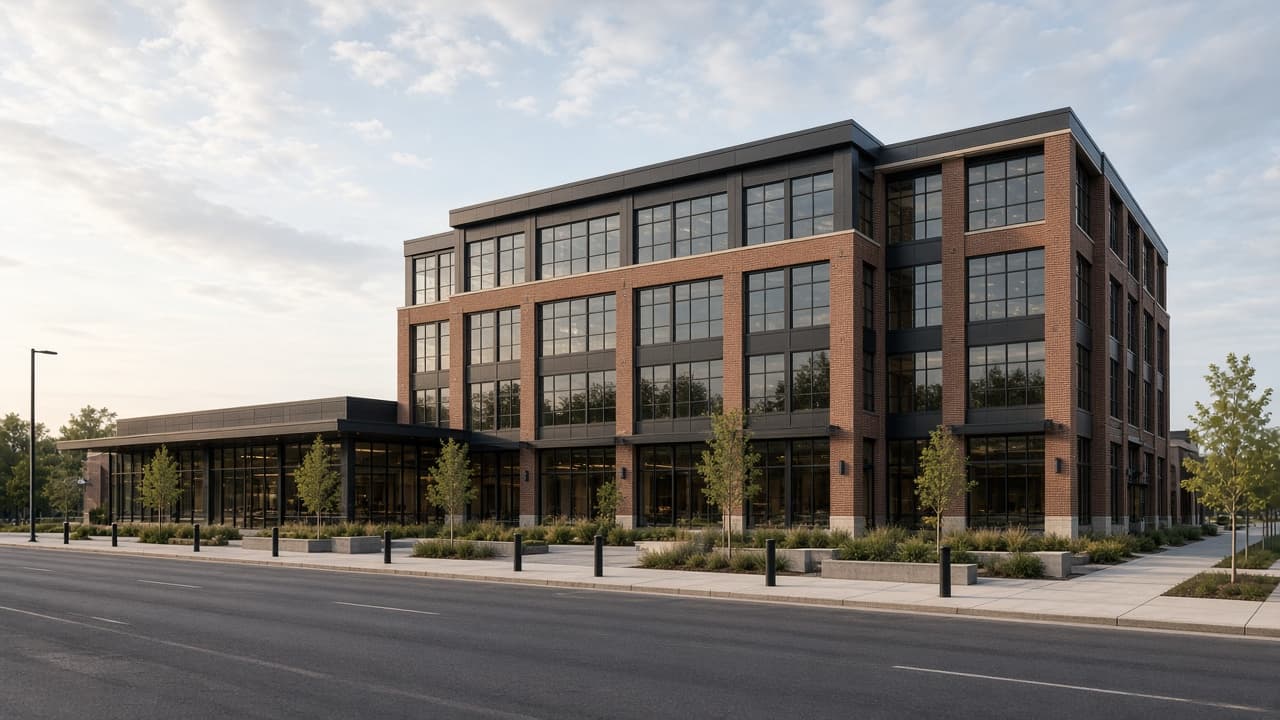
Pick a part of the metro on purpose
The Omaha metro is large enough that a building in Downtown Omaha and a building in Elkhorn can share a property type and still serve different people. West Omaha often comes up when employees and customers already live or work on that side of the city. Northwest Omaha and southwest Omaha come up when the user cares how a truck or a customer reaches the interstate system. Those are search patterns, not a ranking of which area is better.
Douglas County and Sarpy County are both in the conversation, and they are not the same government. Papillion, La Vista, Bellevue, and Gretna each sit in Sarpy County with their own streets, parking patterns, and city rules. A retailer counting on nearby households may look there. An owner who needs a yard or a dock may look at an established industrial pocket instead. The Omaha commercial real estate page is the hub for that geography. This article is the buying decision.
| Type | Ask this before the tour | Where to read further |
|---|---|---|
| Industrial | Can the truck you use reach the dock from the street you will actually drive? | Industrial buildings |
| Office | Does the parking and the floor plate match the headcount? | Office buildings |
| Retail | Can customers see it, park, and is the use allowed? | Retail buildings |
| Owner-user | Can the business operate here on a real move-in date? | Owner-user buildings |
| Investment | Do the leases support the income after vacancy and expenses? | Investment property |
Industrial, office, and retail do not fail the same way
An industrial miss in this metro is usually physical: clear height, doors, court depth, power, or a route that looked fine on a map and fails with a trailer. Read the industrial checklist and the industrial page. An office miss is layout, parking, and what the operating expenses include. Downtown Omaha can be a parking and access problem even when the suite is attractive. A west Omaha office can be a different commute and a different building age. The office page keeps those items in one place.
Retail fails when visibility, access, or co-tenancy does not match the customer, or when the use is not allowed. A Bellevue corner and a downtown storefront are both retail and still different errands. Retail is the type page. Land and redevelopment sites add utilities, demolition, and whether the city will allow the next use. Infill in Omaha is a different utility question from a clearer site in southwest Omaha or in Gretna. Start that work on the land page, then confirm every assumption with the city or the utility. Nothing here is an engineering opinion.
Owner-user and investment are different purchases
An owner-user should test location against customers and labor, then size, expansion, parking, loading, and power. Occupancy cost is the rent you avoid, the debt you take, and the repairs you will own. The owner-occupied buying article and the lease or buy comparison belong in that decision. A purchase that strands the company in the wrong part of the metro is not saved by a lower payment.
An investor should rebuild income before admiring a ratio. Use the property’s leases, a vacancy allowance you can explain, and expenses from this building’s bills. The NOI, cap rate, cash-on-cash, and DSCR calculators do that arithmetic. The investment return calculator puts several of those readings in one place. None of them contains a hidden Omaha average. How to evaluate an investment is the sequence. Multifamily and mixed-use follow the same income discipline on the multifamily and mixed-use pages.
Zoning, utilities, parking, and redevelopment
Confirm the zoning district with the city that governs the parcel. Omaha’s code is not Papillion’s, La Vista’s, Bellevue’s, or Gretna’s. A Douglas County parcel and a Sarpy County parcel can look similar and follow different rules. Parking minimums, outdoor storage, and signs are in those codes. What buyers should check is the list. The city or county is the source.
Utilities and redevelopment deserve the same humility. Capacity for water, sewer, and power is a utility question, especially if you will intensify a use or rebuild on an older site. Environmental history is a consultant’s question, more often on industrial land and older corridors, and it is explained in the Phase I article. Survey and access are title work. Financing, if you need it, is a lender’s term sheet run through the ideas in how financing works. Bring the address to those checks. Do not bring a metro slogan.
Questions people ask
Do you cover Sarpy County when someone says Omaha?
Yes, when the property is part of the Omaha metro, including Papillion, La Vista, Bellevue, and Gretna. The rules and the streets are still local. Name the city.
Is west Omaha the same search as downtown?
No. Parking, building age, interstate access, and the customers nearby change who should be looking. Treat them as different assignments unless your operation truly can use either.
Can you tell me Omaha cap rates or vacancy?
Cap rate for a building starts with that building’s NOI and price. Vacancy in a model should be this property’s allowance, labeled as history or as a forecast.
What if the business could also operate in Lincoln?
Then run a separate search. Lincoln is not a cheaper Omaha. Read buying in Lincoln on its own facts, and do not slide an Omaha sale across as proof.
Written by Bryan Robinson, a Professional Sales Agent with NHS Commercial, licensed in nebraska.
Want help evaluating a commercial property?
Call or text Bryan at 402-521-3000 to talk through a specific property.

Bryan Robinson
NHS Commercial
Professional Sales Agent | Licensed in Nebraska