Property Types
What Buyers Should Look for in Industrial and Warehouse Property
Industrial buildings are tools. Clear height, doors, truck space, power, and the floor decide whether the operation fits. The brochure’s square footage does not.
Quick answer
Measure clear height to the lowest obstruction, count dock and drive-in doors, and test whether a truck can actually use the court. Then check power, floor load, fire suppression, parking, zoning, access, expansion land, and the roof with the right specialists.
Key takeaways
- Clear height is measured to the lowest beam, light, or sprinkler, not to the roof peak.
- A dock without room to maneuver is a door you cannot use.
- Power, floor load, and fire suppression need specialists when the use is heavy or unusual.
- Zoning and access can veto a building that otherwise fits the operation.
Clear height, docks, and drive-ins
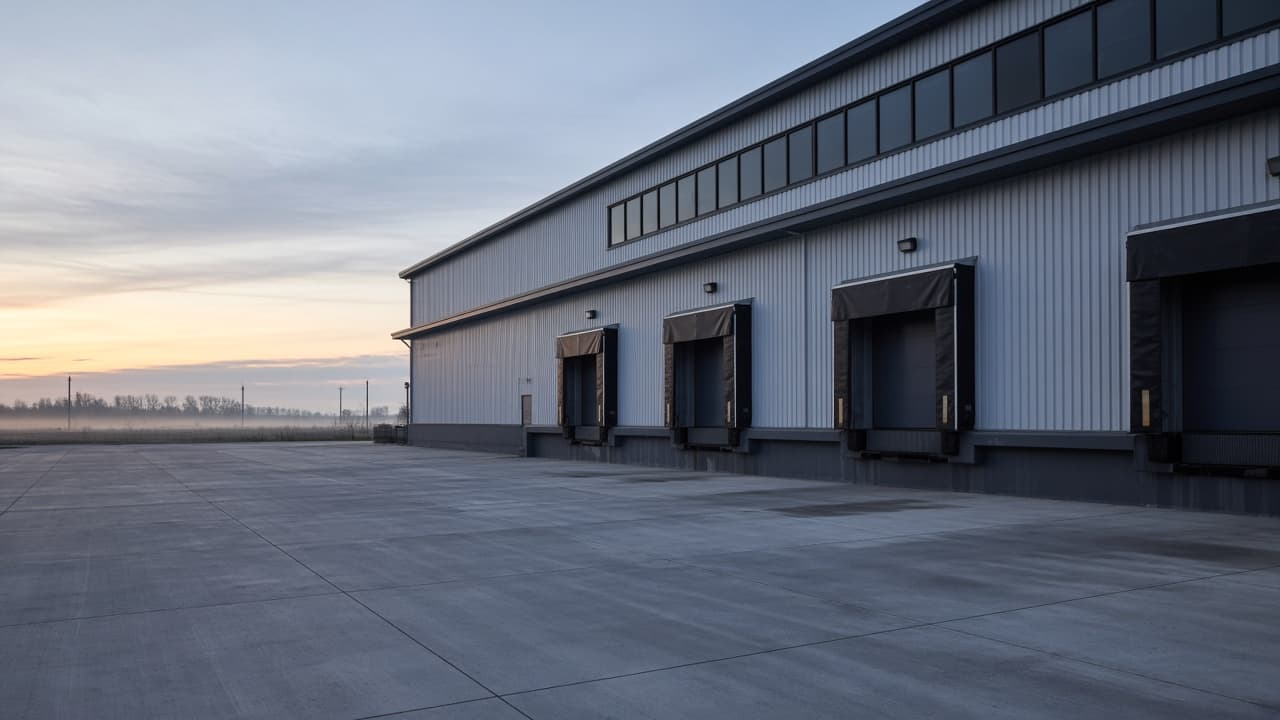
Square footage tells you the floor. Clear height tells you whether racking, equipment, or a product stack fits under the structure. Measure from the floor to the lowest obstruction: a joist, a light, a sprinkler head. A marketing card that quotes the peak of the roof is describing air you cannot use. Write down the number you measured and the place you measured it.
Dock-high doors, levelers, seals, and bumpers are a system, not a photo. Count the doors, note their size, and ask which trailers you run. Drive-in doors at grade level matter for vans, bobtails, and equipment that should not sit on a dock. The industrial property page is the wider context. This list is what to verify on a specific building.
| Item | Write down | Who confirms a hard question |
|---|---|---|
| Clear height | Feet to the lowest obstruction | You, with a measure, then a racking vendor if you store high |
| Docks | Count, size, levelers | The operation’s own trailers |
| Drive-ins | Count and size | The vehicles that must enter |
| Truck court | Depth and obstacles | A civil designer if the maneuver is tight |
| Power | Volts and amps as labeled | An electrician or the utility |
| Floor | Any stated design load | An engineer if your use is heavier than ordinary storage |
Truck court, yard, and access
A truck court is the paved area where a trailer backs into a dock. If it is too shallow, or blocked by parking and poles, the door count is theoretical. Measure the court against the trucks you use. If the geometry is tight, a civil designer or a traffic reviewer should look. Bryan’s construction background helps him notice a court that looks short.
Yard space is where trailers and outdoor materials wait. Zoning may limit outdoor storage even when the pavement exists. Access is the route from a public street to that yard. A legal access problem is a title and survey issue. A physical access problem is a truck that cannot make the turn from the road you will actually use. Around Omaha, a buyer who lives by trucks often starts with how the site meets the highway system. In Lincoln, that same buyer often starts with the turn onto the street that fronts the building. Neither shortcut replaces driving the route.
Power, floor load, fire suppression, and the roof
Power has to match the equipment. Read what is posted on the gear, then have an electrician or the utility confirm the service. Capacity should come from the service, not from a photo or a neighboring building. Floor load matters when you rack dense product or set heavy machines. If a design load is documented, keep the document. If your use is heavier than ordinary storage, an engineer should review it.
Fire suppression should be identified, not assumed. Note whether a system exists and any label a contractor can recognize. Whether it fits your commodity and your storage height is a question for a fire protection contractor or the fire authority. Do not treat a sprinkler head as approval. The roof is the other silent budget: age, leaks, drainage, and patches. An inspector or a roofing contractor should speak to condition. A buyer who skips the roof because the rent roll looked clean is buying a repair.
Parking, zoning, and expansion
Employee parking and trailer parking compete for the same pavement. A site that works at a small headcount can fail when a second shift arrives. Zoning may set a minimum parking count and may also restrict trailer storage. Confirm both with the city or county. Office build-out inside the warehouse matters if supervisors and customers need finished space. Measure it separately from the warehouse floor.
Expansion is land plus permission. Extra ground helps only if setbacks, stormwater, and access let you pave or build. Functional obsolescence is the quiet version of the same idea: a building that met an older operation and cannot meet a current one without more capital than the price admits. Put immediate repairs and later capital in two columns during due diligence. Then decide if the operation fits, or if you are buying a remodel.
Questions people ask
Is there a minimum clear height I should require?
Only the height your operation needs. A user with tall racking and a user with floor-stacked goods are not shopping for the same building. Measure the building. Do not borrow a standard from a national article.
Who checks floor load and fire suppression?
An engineer for a structural question, and a fire protection contractor or the fire authority for the suppression question. Bryan can help you notice what is missing from the file.
Should outdoor storage be assumed in an industrial district?
No. Some districts allow it, some require screening, and some prohibit it. Confirm the parcel with the city or county before you count yard income or yard capacity.
Does a newer roof end the inspection?
No. Age helps. Drainage, penetrations, and the rest of the envelope still matter. Keep the warranty and the invoice, and let an inspector look.
Written by Bryan Robinson, a Professional Sales Agent with NHS Commercial, licensed in nebraska.
Want help evaluating a commercial property?
Call or text Bryan at 402-521-3000 to talk through a specific property.

Bryan Robinson
NHS Commercial
Professional Sales Agent | Licensed in Nebraska